
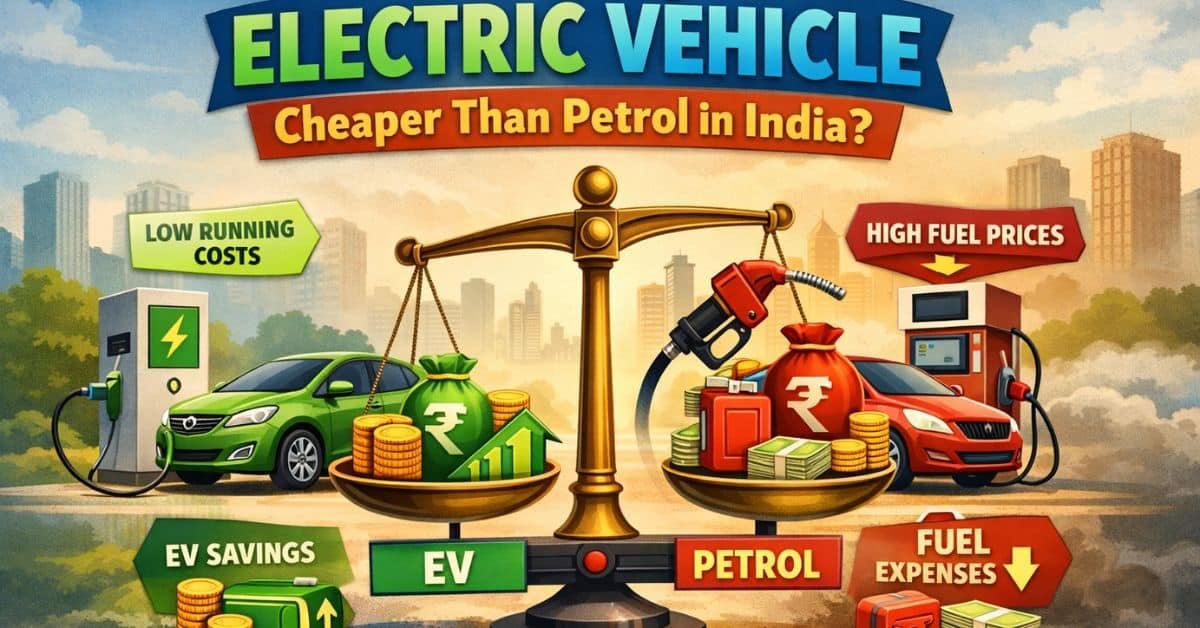

For many Indian car buyers, the biggest question around electric vehicles isn’t range or charging it’s money. Beyond the showroom price, people want to know whether an EV actually reduces monthly expenses or simply shifts costs into a different form. This guide looks closely at ownership cost, not marketing claims, to understand whether driving electric is genuinely cheaper than running a petrol car in India.
The Real Meaning of “Cheaper” in EV Ownership
When buyers compare EVs and petrol cars, the focus often stays on the sticker price. That comparison is incomplete. Ownership cost includes:
- What you spend every month to drive
- How much maintenance demands over time
- Whether savings are consistent or situational
An EV can cost more upfront and still be cheaper to own. Likewise, a cheaper petrol car can quietly drain money over years of daily use.
Daily Driving Cost: Electricity vs Petrol
The most immediate difference appears the moment you start driving.
🚀 Join Our Tech Community!
Get the latest news, updates, and tech trends delivered straight to your phone. Never miss an update!
A petrol car converts fuel into motion with significant energy loss. An electric car uses stored electricity far more efficiently. For everyday commuting, this gap matters.
For most Indian households charging at home, electricity consumption per kilometre is noticeably lower than petrol cost per kilometre in city conditions. Even with rising power tariffs, home charging remains predictable and stable compared to fluctuating fuel prices.
What makes this more noticeable in India is stop-and-go traffic. Petrol cars burn fuel while idling. EVs don’t.
Over a month of regular urban driving, this efficiency difference becomes visible in household expenses.
Maintenance Costs: Fewer Parts, Fewer Bills
Another area where ownership cost quietly shifts is maintenance.
A petrol car relies on multiple components that wear out regularly engine oil, filters, belts, spark plugs, and exhaust-related parts. These aren’t optional expenses; they’re recurring.
Electric vehicles remove most of these items entirely.
What remains are:
- Tyres
- Brake components
- Suspension and cooling systems
Because EVs use regenerative braking, brake wear is slower in city driving. Routine service visits are generally simpler and less frequent.
Over several years, this translates into fewer workshop visits and lower cumulative service bills, especially for owners who drive daily.
The Role of Government Incentives
In India, EV ownership costs are also influenced by policy support.
Many states offer:
- Reduced or zero road tax
- Registration fee exemptions
- Purchase incentives or subsidies
While these benefits vary by location and change over time, they reduce the effective upfront cost for many buyers. Petrol cars do not receive similar long-term incentives.
These benefits don’t make EVs “cheap,” but they narrow the price gap and improve long-term value.
Charging Costs vs Fuel Volatility
Petrol prices in India are highly sensitive to global factors and taxation. For owners, this means unpredictability.
Electricity pricing, especially for residential use, tends to be more stable. Even when tariffs increase, changes are gradual and regulated.
For households with:
- Fixed daily commutes
- Night-time home charging
- Consistent driving patterns
Monthly EV running costs are easier to estimate and control than petrol expenses.
This predictability is often overlooked but matters for families managing tight budgets.
Insurance and Ancillary Expenses
Insurance premiums for EVs are sometimes slightly higher due to battery replacement costs. However, this difference is narrowing as insurers gain more data and confidence.
Other expenses such as parking, tolls, and permits remain identical between petrol and electric vehicles.
What EV owners avoid are:
- Engine-related repairs
- Emission-related compliance issues
- Fuel adulteration risks
These aren’t line-item savings, but they reduce unexpected expenses over time.
When EVs Are Clearly Cheaper
Electric vehicles tend to offer clear cost advantages when:
- Daily usage is high
- Charging happens primarily at home
- Ownership is planned for several years
- City driving dominates over highway-only use
In these conditions, lower running and maintenance costs accumulate quickly.
When the Cost Advantage Is Less Obvious
EVs may not feel cheaper if:
- Usage is very low
- Public charging is used frequently at higher tariffs
- Ownership duration is short
- Upfront budget is extremely constrained
In such cases, savings take longer to appear, and the petrol alternative may feel simpler.
The Long-Term Ownership Picture
Ownership cost is not about the first year—it’s about patterns.
Over time, EV owners benefit from:
- Lower monthly energy spend
- Fewer routine service costs
- Reduced dependency on fuel price swings
These advantages grow with mileage. For Indian households using a car daily, that mileage accumulates quickly.
So, Is an EV Really Cheaper?
For most urban Indian drivers, yes over time.
Electric vehicles don’t eliminate expenses. They change their shape. Instead of frequent fuel payments and engine upkeep, costs become quieter, steadier, and more predictable.
The real savings appear not on day one, but month after month of regular use.