
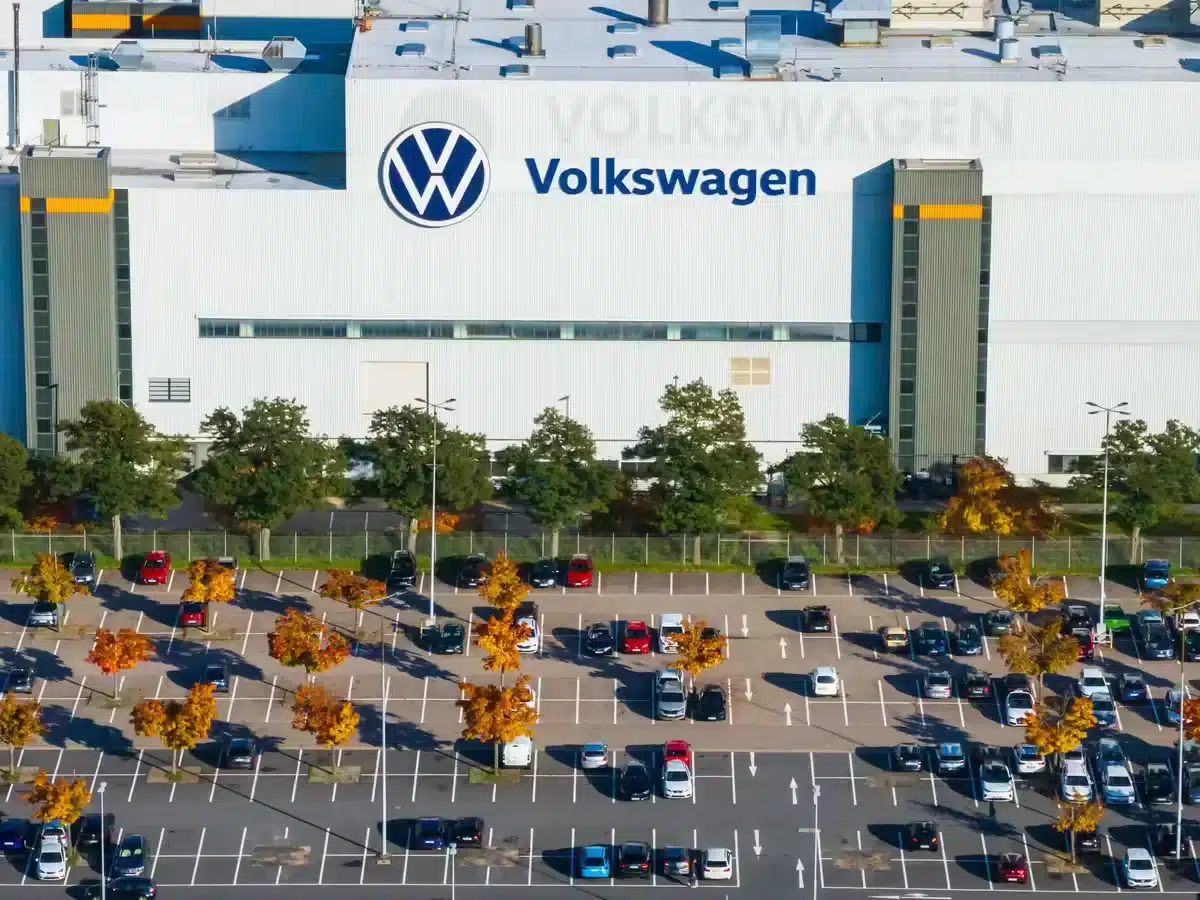
Volkswagen Passenger Cars India is exploring the possibility of locally assembling an India-specific battery electric vehicle, signalling a more focused and long-term approach to the country’s growing EV market. The move reflects Volkswagen’s intent to align its electric vehicle strategy with local market conditions, pricing expectations, and customer preferences.
Local assembly is expected to help Volkswagen improve cost competitiveness while accelerating its electric mobility plans in India, where EV adoption is gaining momentum across major urban centres.
LOCAL ASSEMBLY SEEN AS KEY TO EV AFFORDABILITY
By assembling an India-spec BEV locally, Volkswagen aims to reduce dependency on fully imported electric vehicles, which often face higher costs due to duties and logistics. Local assembly would allow better price positioning and improved scalability as demand increases.
This strategy also enables the brand to leverage its existing manufacturing infrastructure in India while adapting vehicle specifications to suit local driving conditions, range requirements, and usage patterns.
INDIA-SPEC BEV TO BE TAILORED FOR LOCAL NEEDS
Volkswagen’s India-focused BEV is expected to prioritise a balance between range, performance, and affordability. Rather than adapting an existing global model without changes, the company is considering a product tailored specifically for Indian buyers.
Such an approach could help Volkswagen compete more effectively in a market where customers are highly value-conscious and increasingly compare electric vehicles on total cost of ownership, charging convenience, and real-world usability.
STRATEGIC SHIFT IN VOLKSWAGEN’S INDIA EV ROADMAP
The move towards local assembly highlights a shift in Volkswagen’s India strategy, moving from exploratory EV offerings to a more committed and structured plan. As the EV ecosystem matures, manufacturers are increasingly focusing on localisation to support long-term growth.
Volkswagen’s recalibrated approach reflects lessons from earlier EV launches in the market, where pricing and localisation played a decisive role in customer adoption.
IMPACT ON VOLKSWAGEN’S POSITION IN INDIA
Local assembly of an India-spec BEV could significantly strengthen Volkswagen’s presence in the electric vehicle segment, allowing the brand to expand beyond its current internal combustion engine portfolio.
With increasing government support for EVs, improving charging infrastructure, and rising consumer awareness, Volkswagen’s move positions it to tap into the next phase of India’s passenger vehicle growth.
WHAT THIS MEANS FOR INDIA’S EV MARKET
Volkswagen’s local assembly plan reinforces a broader industry trend where global automakers are adapting their EV strategies specifically for India. As more brands move towards localisation, competition in the electric vehicle space is expected to intensify, benefiting consumers through better pricing and product choices.
If executed successfully, Volkswagen’s India-spec BEV could become an important addition to the country’s expanding electric car lineup.
