
Turbo petrol engines have become extremely popular in India over the past few years. They promise stronger performance, better highway drivability, and improved fuel efficiency compared to naturally aspirated petrol engines. However, many buyers focus only on power figures and mileage claims, ignoring long-term ownership impact.
A turbo engine is mechanically more complex than a regular petrol engine. It operates under higher pressure and temperature, which means maintenance planning becomes more important. If you are considering buying a turbo petrol car in 2026, understanding the real five-year maintenance cost is essential before making a decision.
Why Turbo Engines Cost More to Maintain
A turbocharger compresses air to increase engine output. While this improves performance, it also adds extra components such as intercoolers, high-pressure fuel systems, and additional cooling requirements. These parts increase servicing complexity over time.
Routine service intervals for most turbo petrol cars range between 10,000 to 15,000 km. However, engine oil quality becomes more critical. Turbo engines typically require fully synthetic oil, which costs more than regular mineral oil used in naturally aspirated engines.
Over five years, oil changes alone can cost ₹8,000–₹12,000 more compared to non-turbo petrol engines.
Real 5-Year Maintenance Breakdown
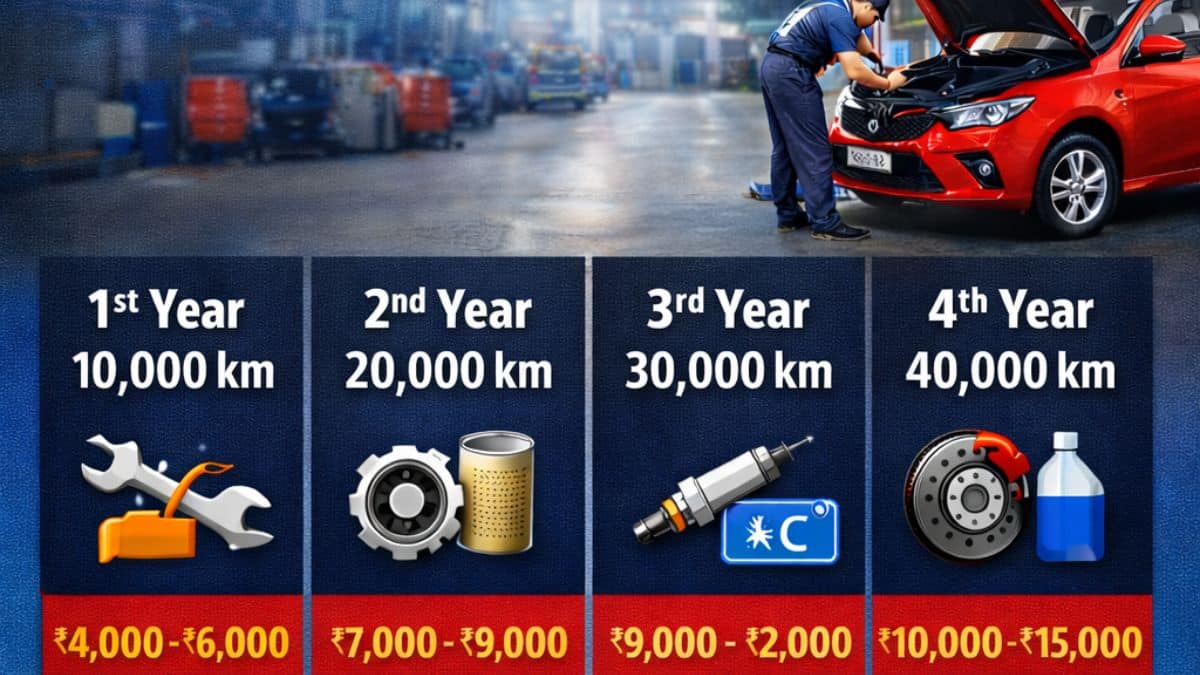
Let’s look at realistic ownership expenses over five years (assuming 12,000 km per year):
- Scheduled Services
Average service cost per year ranges from ₹8,000 to ₹15,000 depending on brand and segment. Over five years, this totals ₹40,000 to ₹75,000. - Turbocharger Health
Turbo units are generally durable, but improper driving habits such as aggressive acceleration without warm-up can reduce lifespan. Replacement costs can range from ₹60,000 to ₹1.2 lakh if out of warranty. - Spark Plugs & Filters
Turbo engines often use iridium spark plugs, which are more expensive. Replacement cycles are shorter in high-stress driving conditions. - Fuel Quality Sensitivity
Many turbo petrol engines recommend high-octane fuel for optimal performance. While not mandatory in all cases, using premium petrol increases annual fuel expenditure.
When buyers ignore these factors, they later realise the hidden maintenance expenses are higher than expected.
Turbo Petrol vs Naturally Aspirated: Cost Comparison
Naturally aspirated petrol engines are simpler in design. They generate less heat and operate at lower pressure, resulting in slightly lower wear and tear over time. This typically translates to lower servicing cost and fewer high-value component risks.
Turbo petrol engines, however, provide better torque delivery at lower RPM, which improves drivability in city traffic. The trade-off lies in long-term upkeep and stricter maintenance discipline.
If you drive aggressively or skip service schedules, turbo engines can experience higher mechanical strain and increased repair probability.
Heat, Traffic and Indian Driving Conditions
Indian driving conditions play a major role in turbo engine health. High ambient temperatures, bumper-to-bumper traffic, and frequent short drives increase thermal load on the engine.
Repeated heat cycles without proper cooling can create conditions similar to real-world battery stress, where mechanical systems operate under constant load. While not directly related to EVs, the concept of stress under extreme conditions applies equally to turbocharged engines.
Allowing a short idle period before switching off the engine after highway driving helps protect turbo longevity.
Is a Turbo Petrol Car Worth It?
Turbo petrol cars make sense for buyers who prioritise performance, highway cruising comfort, and strong mid-range torque. They are particularly appealing in compact SUVs and mid-size sedans where weight demands extra power.
However, if your driving is mostly short city commutes with heavy traffic and minimal highway use, a naturally aspirated petrol engine may prove more economical in the long term.
The key is aligning your driving style with engine characteristics rather than choosing based purely on horsepower numbers.
