
The automotive industry is undergoing one of the most profound transformations in its history. Vehicles are no longer defined only by engines, transmissions, and mechanical systems. Instead, they are increasingly shaped by software, computing power, connectivity, and digital intelligence. This shift has given rise to the concept of software-defined vehicles, commonly known as SDVs.
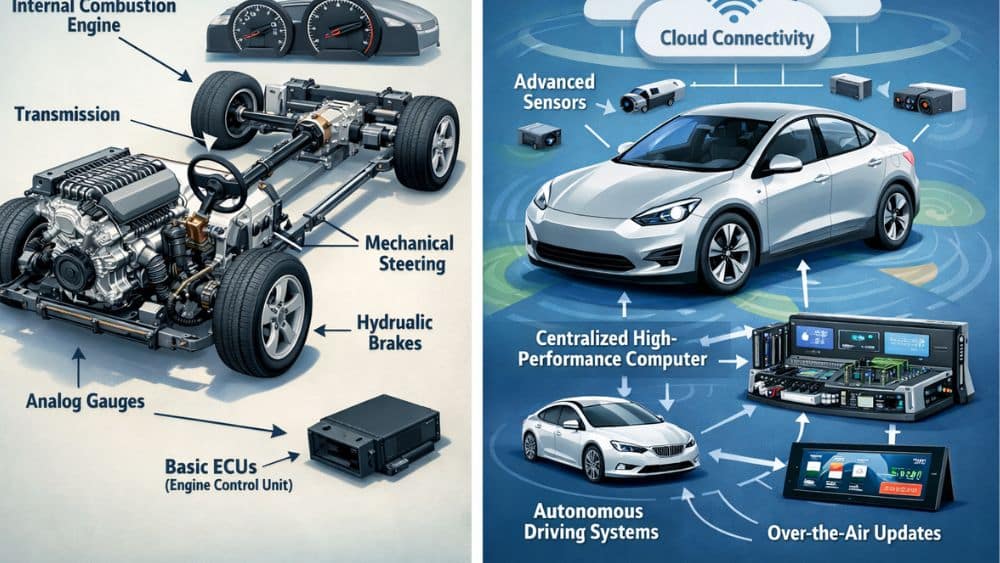
While the technology behind SDVs is advancing rapidly, the mindset required to design, develop, and manage these vehicles is still catching up. Cars cannot be treated like smartphones or consumer gadgets. Their long lifespans, safety responsibilities, regulatory requirements, and physical limitations demand a fundamentally different approach to software design. For SDVs to succeed in the long term, the automotive industry must adopt a completely new software mindset.
What Are Software-Defined Vehicles?
Software-defined vehicles are cars in which software controls, manages, and enhances most vehicle functions. Instead of relying purely on fixed hardware logic, SDVs use centralized computing platforms, digital architectures, and continuous software updates to deliver features, performance improvements, and new capabilities throughout the vehicle’s life.
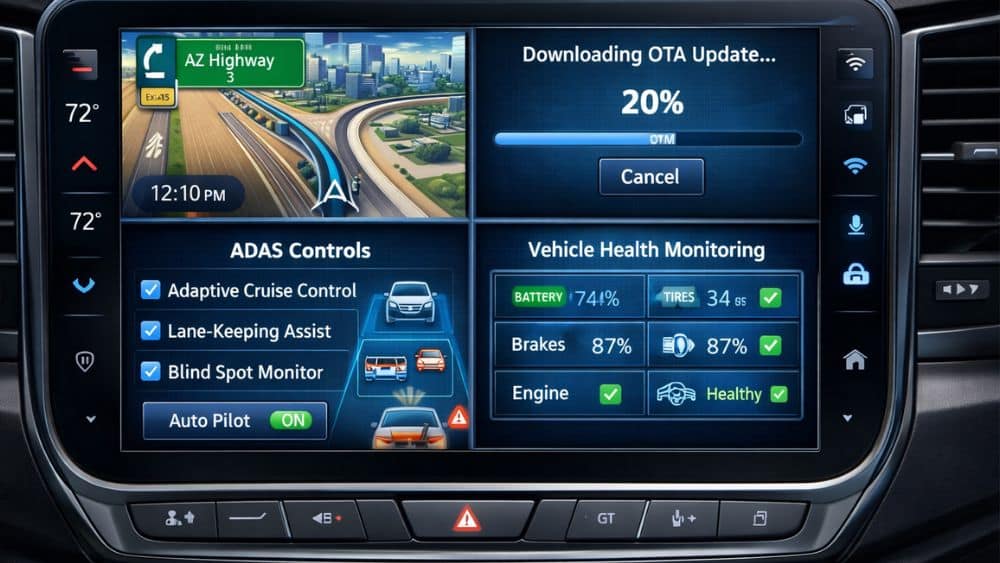
In an SDV, software governs key areas such as:
- Powertrain management and energy optimization
- Advanced driver assistance systems
- Infotainment and connectivity
- Vehicle diagnostics and predictive maintenance
- Safety systems and sensor fusion
- User experience and personalization
This approach allows manufacturers to improve vehicles even after they leave the factory, offering updates that enhance driving performance, efficiency, safety, and comfort.
Why the Smartphone Comparison Is Misleading
Software-defined vehicles are often compared to smartphones on wheels. While this analogy helped introduce the idea of software-driven mobility, it creates unrealistic expectations.
Smartphones typically have a lifespan of two to three years. Vehicles, on the other hand, remain in use for ten to fifteen years, and often much longer. This fundamental difference changes everything about how software should be designed, tested, updated, and maintained.
In consumer electronics, frequent hardware replacement allows rapid technological evolution. In automobiles, hardware platforms must remain reliable and safe for over a decade. Software updates cannot compromise mechanical integrity, safety compliance, or regulatory approvals.
Additionally, automotive software directly controls safety-critical systems such as braking, steering, power delivery, and stability control. A small software error in a vehicle can lead to physical accidents, injuries, or fatalities, unlike a smartphone software bug that typically causes inconvenience rather than danger.
Because of this, automotive software must meet far higher standards of reliability, testing, cybersecurity, and validation than consumer electronics.
The Real Challenge: Shifting the Engineering Mindset
The biggest challenge facing software-defined vehicles is not computing power or connectivity. It is mindset.
Traditional automotive engineering is based on fixed product cycles. A vehicle is developed, tested, produced, sold, and then supported with limited updates. Software, however, thrives on continuous improvement, rapid iteration, and frequent deployment.
Blending these two worlds requires a new development philosophy. Automakers must rethink how they design vehicles from the ground up, ensuring that both hardware and software can evolve together.
Key mindset shifts include:
- Designing hardware that can support long-term software upgrades
- Planning vehicle platforms around digital scalability
- Treating software as a core product, not a secondary feature
- Integrating software teams deeply into vehicle development
- Building organizational structures that support continuous innovation
Without these changes, SDVs risk becoming limited by outdated hardware and rigid development models.
Over-the-Air Updates: Promise and Practical Limits

Over-the-air software updates are often promoted as the key advantage of SDVs. They allow manufacturers to improve vehicle features, fix bugs, and introduce new functions without requiring physical service visits.
While this capability is transformative, it also has practical limits.
Software updates can only enhance what hardware allows. If sensors, processors, memory, and electronic architectures are not designed for future expansion, software updates quickly reach their ceiling. Hardware bottlenecks restrict performance gains, limit new features, and shorten the vehicle’s digital lifespan.
This is why SDV platforms must be built with future readiness in mind. Extra computing headroom, scalable architectures, and modular hardware design become essential. Investing in future-ready hardware ensures that vehicles remain capable of receiving meaningful updates for many years.
Safety and Reliability Come First
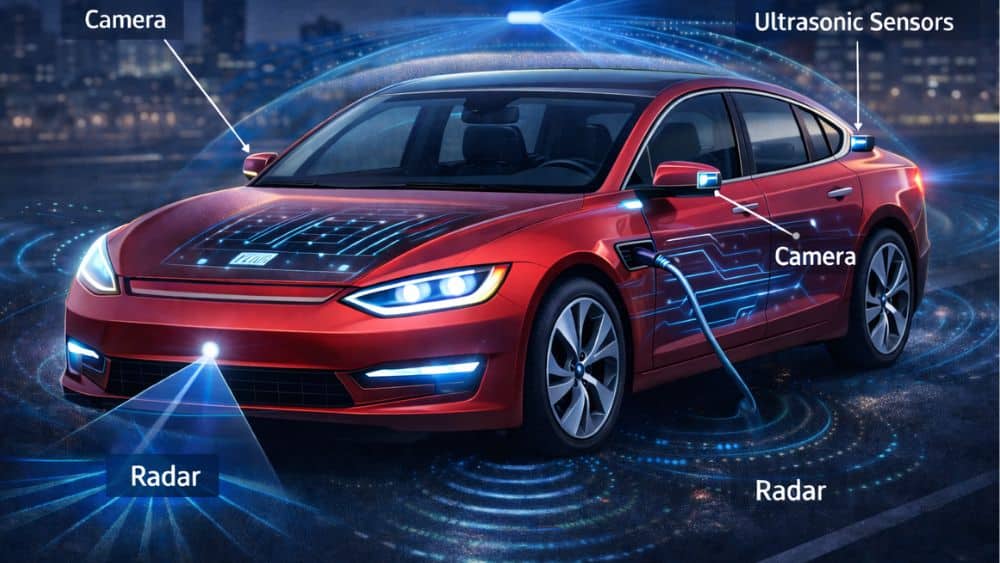
In software-defined vehicles, safety cannot be compromised for innovation. Automotive software must undergo extensive testing, validation, and verification before deployment.
Unlike consumer software, automotive systems must function reliably in extreme temperatures, high vibration, electrical interference, and harsh operating environments. They must also remain functional even when connectivity is unavailable.
Security is another critical concern. As vehicles become increasingly connected, they become potential targets for cyberattacks. A secure SDV architecture must protect against unauthorized access, data breaches, and malicious software manipulation.
This requires:
- Robust encryption and authentication systems
- Secure software deployment pipelines
- Continuous vulnerability monitoring
- Rapid security patching mechanisms
Without strong cybersecurity frameworks, SDVs risk becoming digital liabilities instead of technological assets.
Planned Evolution Instead of Constant Change
A key principle for SDVs is planned evolution rather than uncontrolled continuous change.
Instead of releasing endless minor updates, manufacturers should structure vehicle evolution into defined phases. These phases allow coordinated improvements across software, hardware, and regulatory compliance.
A practical model involves:
- Major feature upgrades every two to three years
- Hardware refresh cycles aligned with software expansion
- Mid-cycle improvements focused on safety, efficiency, and usability
- Long-term support strategies for aging platforms
This approach ensures predictable development, controlled risk, and sustainable innovation.
Why Software Ownership Matters
As vehicles become more software-centric, responsibility for system integration becomes increasingly complex. Modern cars rely on dozens of suppliers, software vendors, semiconductor manufacturers, and platform developers.
Without clear system ownership, accountability becomes fragmented. Software defects, integration failures, or cybersecurity breaches can fall into grey areas between multiple stakeholders.
Automakers must establish strong internal ownership structures where system-level responsibility is clearly defined. This ensures faster decision-making, better quality control, and stronger long-term reliability.
Centralized architecture teams, unified software platforms, and cross-functional engineering leadership become essential for SDV success.
How SDVs Will Change the Ownership Experience
Software-defined vehicles are not just a technical shift. They will fundamentally change how customers interact with their cars.
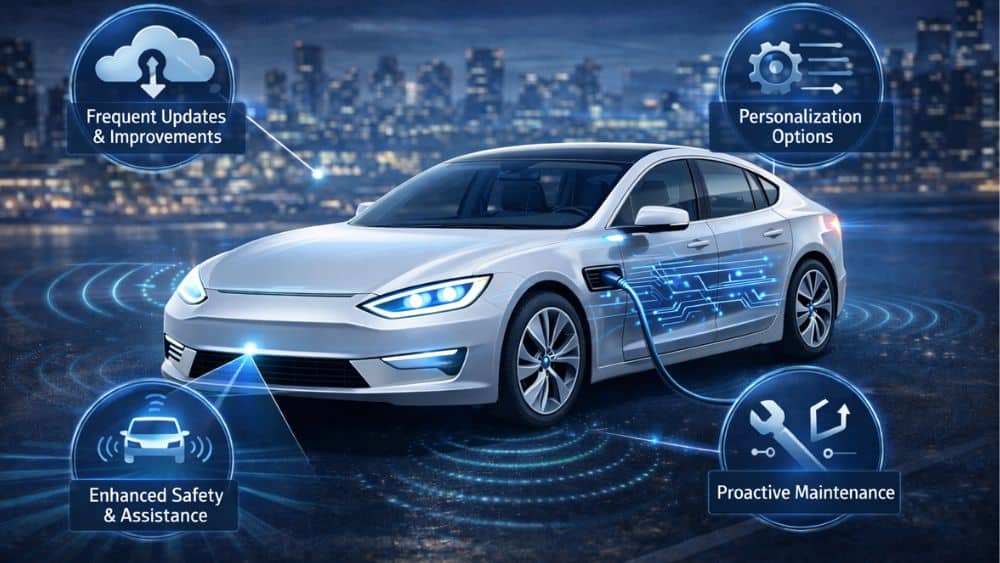
Future ownership may include:
- Feature upgrades through software subscriptions
- Personalized driving profiles stored in the cloud
- Continuous performance optimization
- Predictive maintenance alerts
- Remote diagnostics and repair
This transforms vehicles from static products into evolving mobility platforms.
However, customer trust will depend on transparency, data privacy, security, and reliability. Manufacturers must clearly communicate what software controls, how data is used, and how updates affect vehicle behaviour.
The Road Ahead for Software-Defined Vehicles
The shift toward SDVs is inevitable. As electrification, autonomous driving, and connected mobility expand, software will become the central nervous system of the automobile.
Success will not depend solely on faster processors or better displays. It will depend on whether automakers can adopt a long-term, infrastructure-focused mindset.
Vehicles must be designed as evolving digital platforms, capable of safe, secure, and reliable operation for over a decade. Hardware and software must be co-developed from the earliest design stages. Organizational structures must support continuous learning and innovation.
Only then can software-defined vehicles truly deliver on their promise of smarter, safer, and more sustainable mobility.
