
Hyundai is preparing one of its most important product phases for the Indian market as it moves into 2026. Instead of frequent short-term launches, the company is focusing on platform upgrades, electric vehicle expansion, and premiumisation of its SUV lineup. For buyers planning a purchase in late 2025 or 2026, Hyundai’s roadmap offers clear signals on which models are nearing major updates and which segments will see meaningful changes.
The company’s strategy for India is built around three priorities: expanding its electric vehicle portfolio beyond early adopters, strengthening its SUV dominance across price bands, and improving technology and safety without disrupting resale values. This approach suggests that Hyundai is aiming for long-term ownership confidence rather than quick headline-grabbing launches.
Electric vehicles: the biggest shift by 2026
Hyundai’s electric strategy in India becomes more serious by 2026, moving beyond a single premium EV into a structured lineup. The expected arrival of the Hyundai IONIQ 6 signals Hyundai’s intent to introduce long-range electric sedans for buyers who prioritise efficiency, highway stability, and premium interiors over compact SUV styling. This model is expected to appeal to urban professionals and buyers upgrading from petrol sedans or premium hatchbacks.
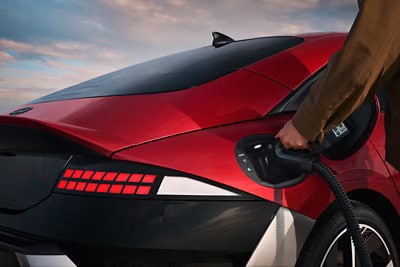
At the same time, Hyundai is likely to continue refining the Hyundai IONIQ 5 rather than replacing it outright. Improvements are expected to focus on software, charging performance, and real-world range efficiency. For buyers considering long-term EV ownership, waiting for these updates could offer better platform maturity without the risks associated with first-generation products.
SUVs remain Hyundai’s volume backbone
SUVs will continue to define Hyundai’s sales strategy in India through 2026. Instead of introducing entirely new nameplates, Hyundai is expected to upgrade existing models to keep them competitive in a crowded market.
The Hyundai Tucson is likely to receive a refresh focused on interior technology, safety features, and powertrain refinement. These updates are aimed at buyers upgrading from compact SUVs who want more comfort and sophistication without stepping into luxury-brand pricing.
Above the Tucson, Hyundai is expected to introduce the Hyundai Palisade, a flagship three-row SUV. This model is targeted at buyers looking for space, comfort, and refinement rather than aggressive performance. Its positioning suggests Hyundai is testing demand for premium family SUVs in India without directly competing with luxury marques.
Mass-market models and incremental updates
While electric vehicles and premium SUVs attract attention, Hyundai is not neglecting its high-volume segments. However, changes here are expected to be evolutionary rather than transformational.
The Hyundai Exter is expected to receive a facelift that improves interior quality and features rather than altering its mechanical setup. This keeps it relevant for city-focused buyers who value ease of ownership and affordability.
The Hyundai Creta, one of Hyundai’s most important models, is not expected to undergo a full generational change immediately. Buyers who are not in a hurry may benefit from waiting, but the current model is likely to retain strong resale value due to Hyundai’s conservative update cycle.
MPVs and family-focused buyers
Hyundai is also expected to strengthen its family-oriented offerings with models such as the Hyundai Stargazer. This MPV is designed for private buyers rather than fleet operators, focusing on comfort, interior space, and long-distance usability. It is likely to appeal to buyers who want practicality without moving to a large SUV.
Should buyers wait or buy now?
Waiting for Hyundai’s 2026 lineup makes sense for certain buyers, particularly those interested in electric vehicles or premium SUVs and those planning long-term ownership of seven years or more. Updated platforms, improved technology, and better efficiency could justify the delay.
Buying now still makes sense if you need immediate replacement, prefer proven models like the Creta or Tucson, or have primarily city-based usage where current EV and ICE offerings already meet your needs.
Hyundai’s 2026 roadmap reflects a cautious but confident approach. Instead of chasing rapid change, the company is focusing on refinement, electrification, and long-term value. For buyers planning ahead, especially in the EV and premium SUV segments, waiting could deliver a more future-ready product. For everyone else, Hyundai’s existing lineup remains one of the safest ownership choices in the Indian market.

1 thought on “Hyundai 2026 Roadmap: Which New Cars Are Worth Waiting For”