
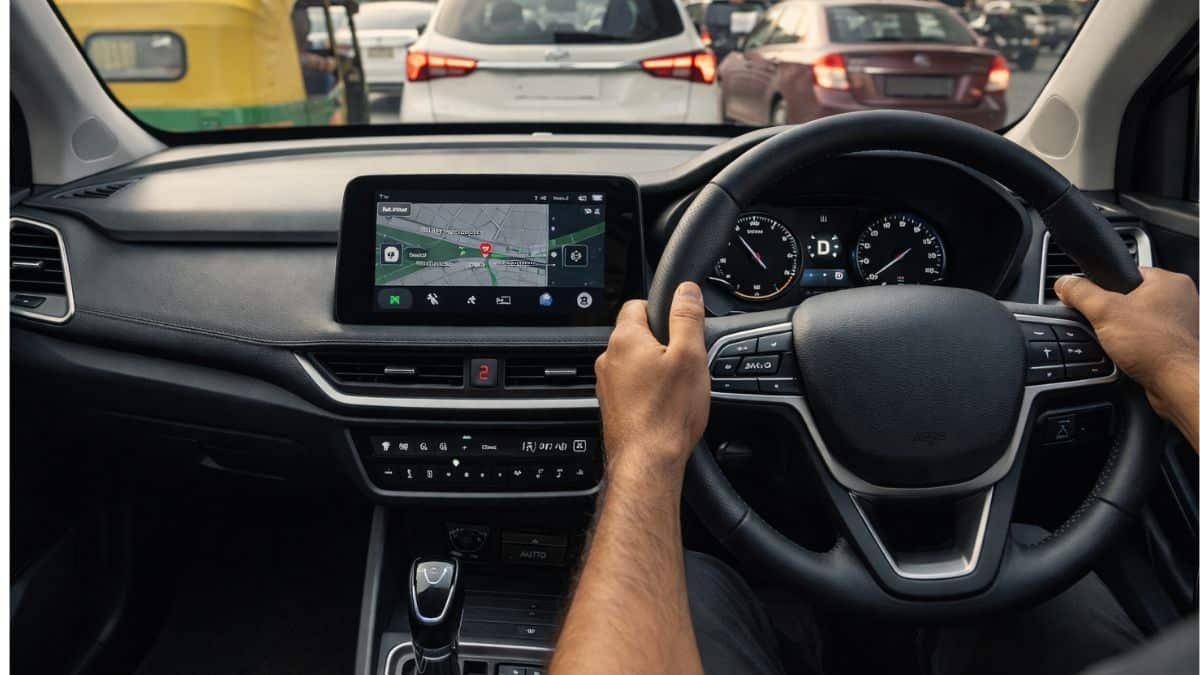
For urban Indian drivers, automatic transmissions are no longer a luxury — they are a necessity. Stop-and-go traffic, narrow lanes, and long signal waits make clutch-heavy driving exhausting. The real question for budget-conscious buyers is simple: does CVT or AMT feel smoother and less stressful in daily city use?
Many buyers analysing the fuel price shift impact between petrol and diesel options often overlook transmission comfort. But in metro traffic, gearbox behaviour can matter more than engine type.
How CVT Works in City Conditions
A Continuously Variable Transmission (CVT) does not shift gears traditionally. Instead, it uses a pulley system to provide seamless acceleration.
In daily traffic, CVT advantages include:
• Smooth gear transitions
• No noticeable jerks
• Easier crawling in bumper-to-bumper conditions
• Better comfort for new drivers
Because there are no fixed gear steps, the driving experience feels linear. This makes it ideal for urban commute patterns where frequent braking and slow acceleration are common.
How AMT Feels in Traffic
Automated Manual Transmission (AMT) is essentially a manual gearbox with automated clutch operation.
AMT advantages:
• Lower upfront cost
• Better fuel efficiency in some cases
• Simple mechanical design
• Affordable maintenance
However, in heavy traffic, AMTs can produce slight head-nod movements during gear shifts. While modern calibrations have improved significantly, slow-speed smoothness still depends on tuning.
For buyers balancing cost priorities like those comparing city EV charging expense versus ICE ownership, AMT often becomes attractive due to lower purchase price.
Stress Factor in Real Urban Driving
In city conditions, stress usually comes from:
• Jerky gear shifts
• Delayed throttle response
• Clutch fatigue (manual cars)
• Sudden acceleration
CVT generally wins in smoothness. AMT wins in affordability.
If your daily drive involves dense metro traffic with crawling speeds, CVT reduces mental and physical strain. If your commute includes moderate traffic with occasional open stretches, AMT may feel acceptable.
Fuel Efficiency Consideration
AMTs often deliver slightly better mileage compared to CVTs in similar cars. This is because AMT is mechanically closer to manual transmission.
In 2026, when buyers re-evaluate vehicle economics alongside topics like EV transition delays, many still prefer fuel-efficient ICE options under tight budgets.
For pure city usage under 10,000 km per year, the difference in fuel economy between CVT and AMT may not significantly affect annual cost.
Long-Term Maintenance
CVT maintenance:
• Requires CVT transmission fluid changes
• Slightly higher service cost
• Smooth operation depends on proper servicing
AMT maintenance:
• Clutch wear over time
• Lower gearbox repair cost
• Simpler mechanical structure
In terms of long-term ownership cost, AMT may be cheaper to maintain. However, CVT offers better daily comfort.
Driving Comfort vs Budget Balance
Choose CVT if:
• You prioritize smooth driving experience
• You drive mostly in heavy city traffic
• You prefer relaxed throttle response
• Budget allows slight premium
Choose AMT if:
• Budget is strict
• You want automatic convenience at lowest cost
• Minor jerks do not bother you
• You value fuel economy slightly more
Which Feels Less Stressful?
For dense urban traffic — CVT clearly feels less stressful.
For moderate city traffic with occasional highways — AMT is acceptable and cost-effective.
In India’s crowded metros, comfort can significantly improve daily commute quality. Transmission choice directly affects fatigue levels over time.
Final Verdict
CVT is smoother and more refined for daily city traffic.
AMT is more affordable and practical for entry-level buyers.
Your decision should depend on:
• Daily traffic density
• Budget flexibility
• Sensitivity to gear shift smoothness
• Long-term ownership plan
In pure stress-reduction terms, CVT leads. In budget practicality, AMT remains strong.
Choose based on your commute pattern — not just brochure specifications.
