
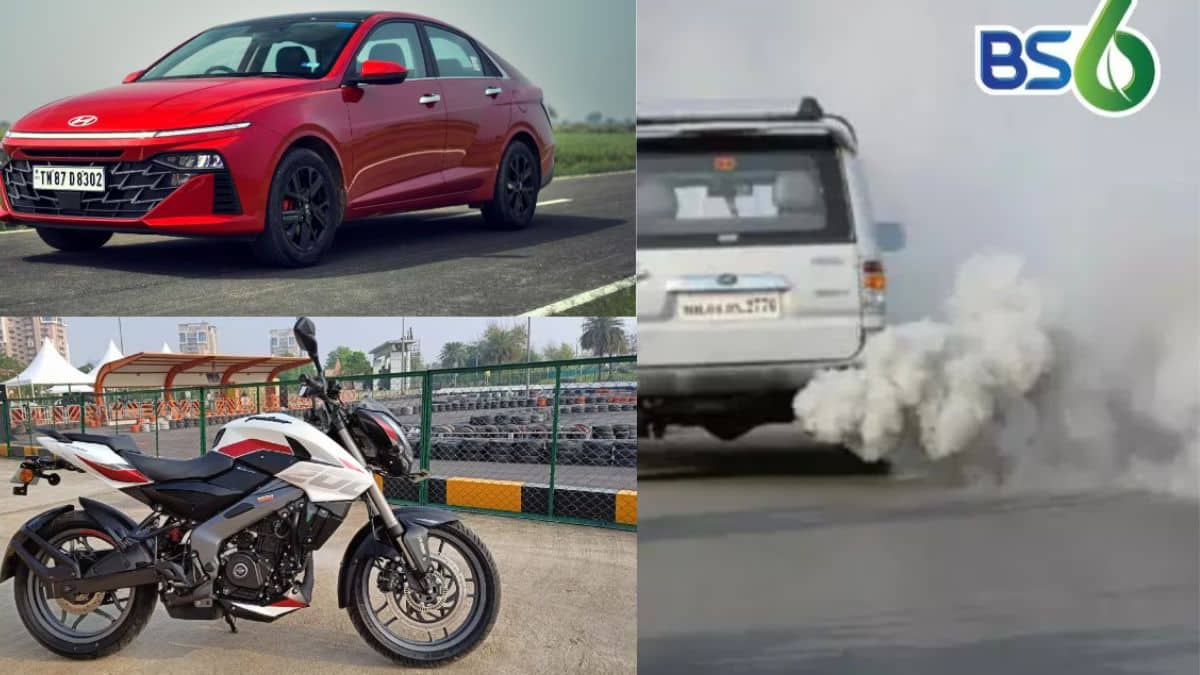
Since the implementation of BS6 Phase 2 norms in April 2023, many Indian petrol car owners have started noticing subtle changes in real-world fuel efficiency. While the objective of the regulation was to reduce emissions through Real Driving Emissions (RDE) compliance, conversations around mileage drop have become increasingly common, especially in city driving conditions.
But is the mileage drop real, or is it a perception influenced by changing fuel quality and traffic conditions? Let’s examine the issue in practical ownership terms.
What Exactly Changed Under BS6 Phase 2?
BS6 Phase 2 moved emission testing from controlled laboratory environments to real-world driving scenarios. Vehicles are now required to meet stricter pollution limits during actual road usage, not just simulated test cycles.
To achieve this, manufacturers updated engine control unit (ECU) calibrations, improved sensor systems, and tuned engines to remain compliant under varied load conditions. Many petrol engines were also optimized for E20 fuel compatibility, which contains a higher percentage of ethanol.
These adjustments were necessary for environmental compliance, but they can slightly influence combustion behaviour and fuel efficiency.
Are Owners Actually Experiencing Lower Mileage?
Based on user discussions and ownership feedback across Indian cities, some petrol car owners report a drop of around 1–2 km/l in city driving. Highway mileage differences appear smaller and often negligible.
The most common observations include slightly higher RPM at cruising speeds, smoother but less aggressive throttle response, and marginally increased fuel consumption during heavy traffic.
However, the experience varies significantly depending on driving style, vehicle segment, and traffic conditions. Not every owner reports a noticeable change.
Why Mileage May Be Slightly Lower
There are a few technical reasons why fuel efficiency may feel different under BS6 Phase 2 compliance.
First, engines may operate with a slightly richer fuel mixture in certain real-world load conditions to maintain emission thresholds. Second, ethanol-blended petrol (E20) has lower energy density compared to pure petrol, which can naturally reduce mileage marginally. Third, continuous real-time emission monitoring forces the ECU to make frequent micro-adjustments to combustion parameters.
These changes are small individually, but together they can create a slight reduction in city fuel economy.
City vs Highway Impact
The difference is more noticeable in urban environments. Stop-and-go traffic, idling at signals, frequent acceleration, and air conditioning usage amplify fuel consumption differences.
On highways, where throttle input is steady and RPM remains consistent, the impact of BS6 Phase 2 tuning is much less visible. Many owners report highway mileage figures similar to pre-update expectations.
Does This Affect Long-Term Ownership Cost?
In practical terms, the financial difference is moderate. For example, if a petrol car’s mileage drops from 16 km/l to around 15 km/l and the owner drives 1,200 km per month, the extra fuel cost may range between ₹500 and ₹700 monthly depending on fuel prices.
Annually, that may translate to ₹6,000–₹8,000. While noticeable, this is not significant compared to insurance premiums, service costs, and depreciation.
For most buyers, total ownership cost remains influenced more by resale value and maintenance expenses than by a small mileage fluctuation.
Is Engine Reliability Affected?
There is no evidence that BS6 Phase 2 compliance reduces engine durability. In fact, the stricter calibration ensures better emission monitoring and improved long-term environmental compatibility.
These vehicles are designed to handle ethanol-blended fuel and stricter testing standards, which may actually future-proof them against regulatory changes.
Should Buyers Be Worried in 2026?
For buyers considering petrol cars in 2026, BS6 Phase 2 compliance should not be viewed as a disadvantage. The slight mileage variation is within manageable limits and does not dramatically increase running costs.
Instead of focusing only on fuel efficiency, buyers should evaluate overall practicality, usage pattern, service support, and long-term ownership expectations.
If daily driving is primarily within congested city traffic, slight variations in mileage are expected regardless of emission norms. If highway driving dominates, the difference becomes minimal.
