
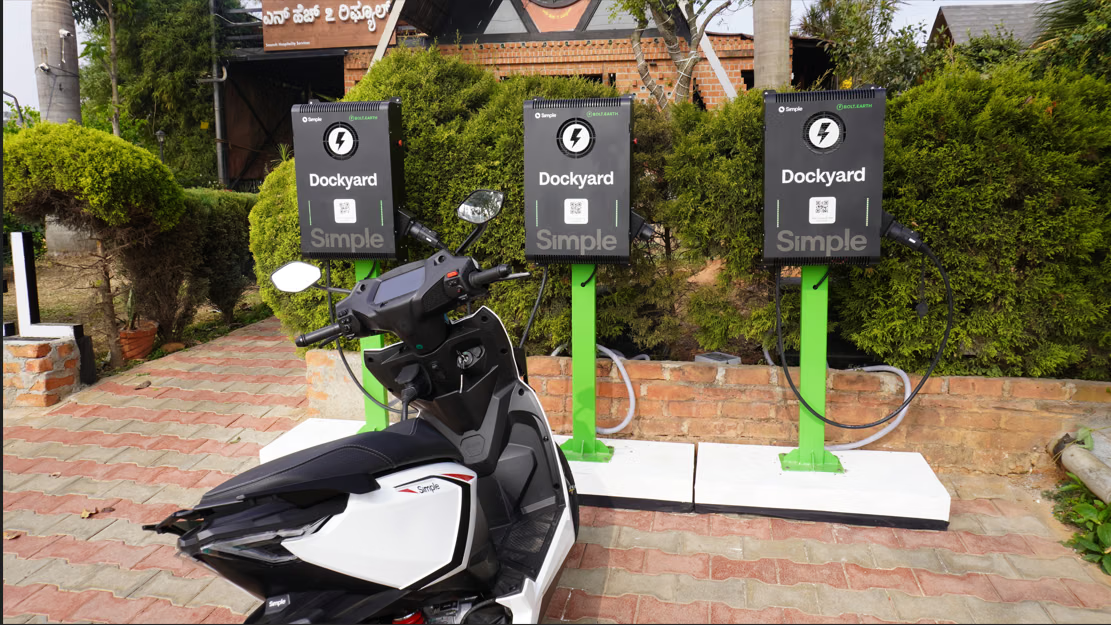
Bolt.Earth and Simple Energy have announced a collaboration to expand DC fast-charging access for Simple Energy’s electric two-wheelers across India.
The partnership is significant as charging access remains one of the key barriers to faster electric two-wheeler adoption in the country. By leveraging Bolt.Earth’s existing Blaze DC Type-6 charger network deployed across more than 100 cities, the companies aim to improve charging convenience and reduce range-related concerns for riders.
All Simple Energy Gen 2 electric scooters are already compatible with Bolt.Earth’s Blaze DC Type-6 chargers, which follow the LEVDC standard and are available in 3kW and 6kW variants. Compatibility for Gen 1 vehicles is expected to be enabled through a forthcoming software update from Simple Energy, extending access to earlier customers as well.
Bolt.Earth currently operates over 270 Blaze DC chargers across 100+ cities, accessible through its EV Charging App. The company states that its broader charging ecosystem includes more than 1,00,000 chargers deployed across 1,900+ cities, supporting two-, three-, and four-wheelers through both standard and fast-charging formats.
The collaboration allows Simple Energy riders to use an established fast-charging network without requiring new infrastructure development in the initial phase. This approach helps accelerate ecosystem readiness while keeping capital deployment efficient.
Integration of Bolt.Earth charger discovery within the Simple Connect App is under development. Once completed, riders will be able to locate compatible charging points directly through Simple Energy’s connected platform, creating a more seamless experience between vehicle and infrastructure.
Company representatives have highlighted that fast charging plays a critical role in mainstream EV adoption. For urban commuters and high-usage riders, reduced charging time compared to conventional home AC charging can significantly improve practicality.
India’s electric mobility transition is heavily influenced by the two-wheeler segment, which accounts for the majority of vehicle sales in the country. Ensuring reliable and widely available charging infrastructure for scooters is therefore considered essential for sustained growth in EV adoption.
The partnership reflects a broader industry trend toward interoperability and collaborative infrastructure models rather than brand-exclusive charging ecosystems. As electric two-wheeler volumes increase, such network integrations are expected to support user confidence and strengthen the overall EV ecosystem in India.
