
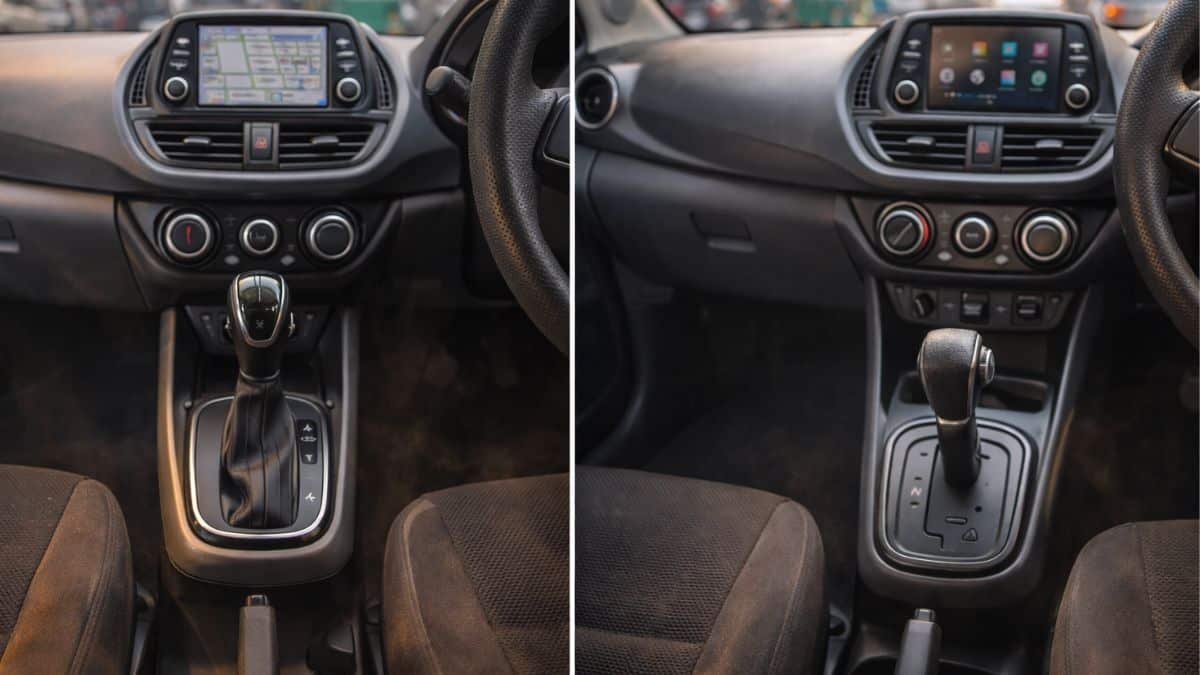
Buying your first automatic car in India often leads to one big question — should you choose CVT or AMT? On paper, both eliminate clutch usage and make traffic driving easier. But over five years of daily use, their reliability patterns differ significantly.
For first-time buyers focused on long term transmission durability, the right choice depends on driving environment and maintenance discipline.
How AMT Performs Over Time
Automated Manual Transmission (AMT) is essentially a manual gearbox with an actuator controlling clutch and gear shifts. Its mechanical simplicity keeps initial cost low. However, because it still uses a physical clutch plate, clutch replacement cost India becomes a factor after extended city usage.
In heavy stop-go traffic, clutch wear can accelerate. City driving gearbox performance in AMTs may feel jerky, but long-term repair expenses are generally predictable and affordable compared to complex systems.
For budget-focused buyers, AMT can be a practical entry-level automatic solution.
CVT Reliability in Daily Urban Use
Continuously Variable Transmission (CVT) operates without fixed gears, offering smoother acceleration. This makes daily commuting more comfortable, especially in crowded cities. Many buyers prefer CVT because it enhances first car ownership experience by reducing driving stress.
However, CVT units rely on belts or pulleys and specialised transmission fluid. Automatic transmission maintenance cost may be slightly higher than AMT due to fluid requirements and component sensitivity.
If maintained correctly, CVTs are reliable, but neglecting service intervals can increase long-term repair bills.
Maintenance Cost Comparison After 5 Years
Over a five-year period, AMT usually has lower servicing expenses due to simpler hardware. CVT may cost slightly more in routine servicing but offers better refinement.
Buyers who already evaluated the broader 1.0L Turbo Petrol SUVs ownership cost know that engine and gearbox together influence total expense. Transmission reliability should not be seen in isolation.
Similarly, understanding how different systems behave under real traffic is important — much like comparing CVT vs AMT Gearbox performance across varying city conditions.
Which Is More Reliable for First-Time Buyers?
If your priority is low upfront price and predictable repair cost, AMT makes financial sense. Its technology is easier to maintain and widely supported across service centres.
If you prioritise smoother driving and comfort in daily commutes, CVT offers better urban usability. Long-term reliability remains strong when servicing schedules are followed strictly.
Neither option is unreliable. The better choice depends on traffic exposure, driving habits, and service discipline.
conclusion
For strict budget control and short urban trips, AMT is usually the safer long-term bet.
For comfort-focused buyers who plan to keep the car for five years or more, CVT may justify its slightly higher servicing cost with improved daily usability.
Choosing the right automatic transmission is less about technology and more about realistic usage patterns.
