
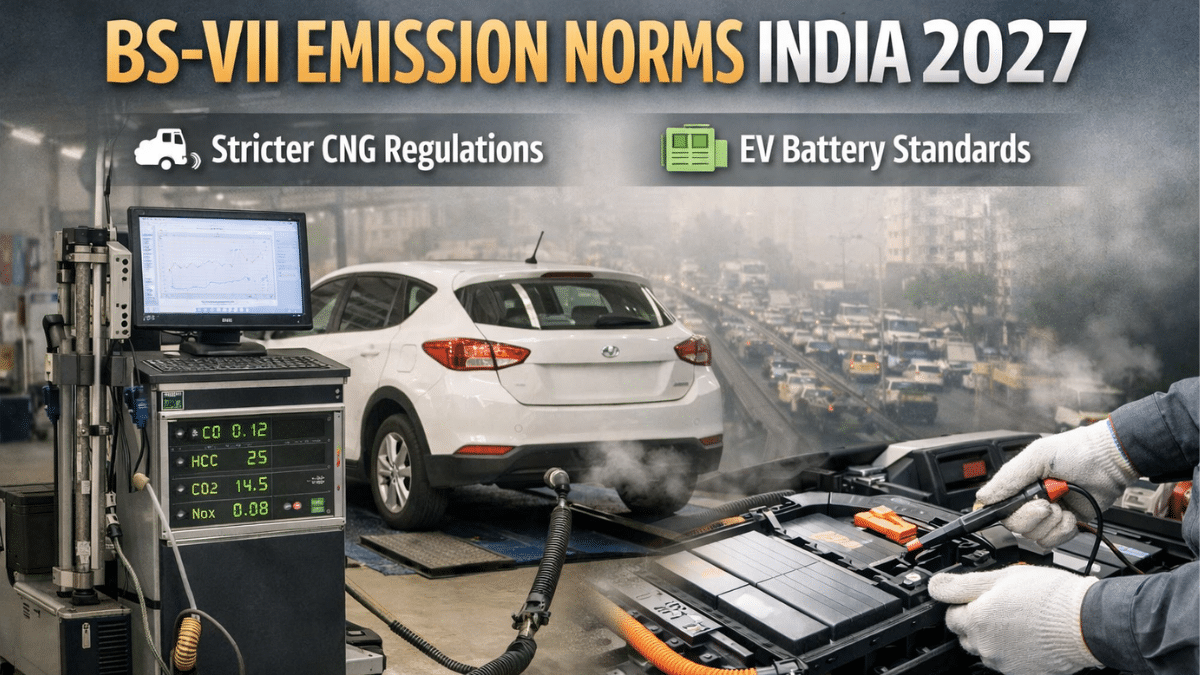

India is preparing for the next major upgrade in vehicle emission standards, with BS-VII norms likely to be implemented from 2027. The upcoming regulations are expected to be stricter and more comprehensive, covering a wider range of vehicles and technologies.
The new norms will not only tighten emission limits but also introduce fresh rules for CNG vehicles and electric vehicle batteries, reflecting a broader push toward cleaner mobility.
Bharat Stage Emission Standards form the backbone of India’s vehicle pollution control system. BS-VII will be the next phase in this framework, aimed at further reducing harmful emissions and improving environmental standards across the country.
The proposed BS-VII norms are expected to introduce stricter emission monitoring. Vehicles may be equipped with real-time systems to track pollution levels continuously under actual driving conditions. In addition, limits on pollutants such as nitrogen oxides and ammonia are likely to become tighter, especially in urban areas where pollution is a major concern.
🚀 Join Our Tech Community!
Get the latest news, updates, and tech trends delivered straight to your phone. Never miss an update!
CNG-powered vehicles, which were earlier considered relatively cleaner, will also come under stricter scrutiny. The new rules are expected to bring more detailed emission checks, include additional pollutants, and apply more uniform standards across all fuel types. This marks a shift toward a more consistent regulatory approach.
Alongside emission standards, the government is also focusing on electric vehicles. New rules for EV batteries are being considered to ensure better safety, durability, and performance. These may include minimum battery life requirements, stricter safety norms, and performance benchmarks to improve long-term reliability.
BS-VII norms are expected to align closely with global standards such as Euro VII, while still being adapted for Indian conditions. The focus will be on real-world emissions rather than just laboratory testing, ensuring that vehicles perform efficiently under everyday usage.
Unlike earlier transitions, the shift to BS-VII is not expected to require major changes in fuel quality. This could make the transition smoother for both manufacturers and fuel suppliers compared to previous upgrades.
The impact on the automobile industry is likely to be significant. Manufacturers may face higher compliance costs and will need to invest in advanced emission control technologies. There will also be a stronger push toward cleaner and alternative fuel vehicles as companies adapt to the new regulations.
For consumers, the new norms are expected to bring cleaner and more environmentally friendly vehicles. At the same time, there could be a slight increase in vehicle prices due to the higher costs involved in meeting stricter standards. However, improved technology and better emission control will benefit users in the long run.
The government is currently working on finalising the BS-VII framework, with a target implementation timeline around 2027. Draft guidelines are expected to be released for consultation before the norms are officially enforced.
The introduction of BS-VII emission norms represents a major step forward in India’s efforts to reduce vehicular pollution. By expanding coverage to CNG vehicles and introducing regulations for EV batteries, the new standards aim to address modern challenges in the automotive sector while supporting a cleaner and more sustainable future.