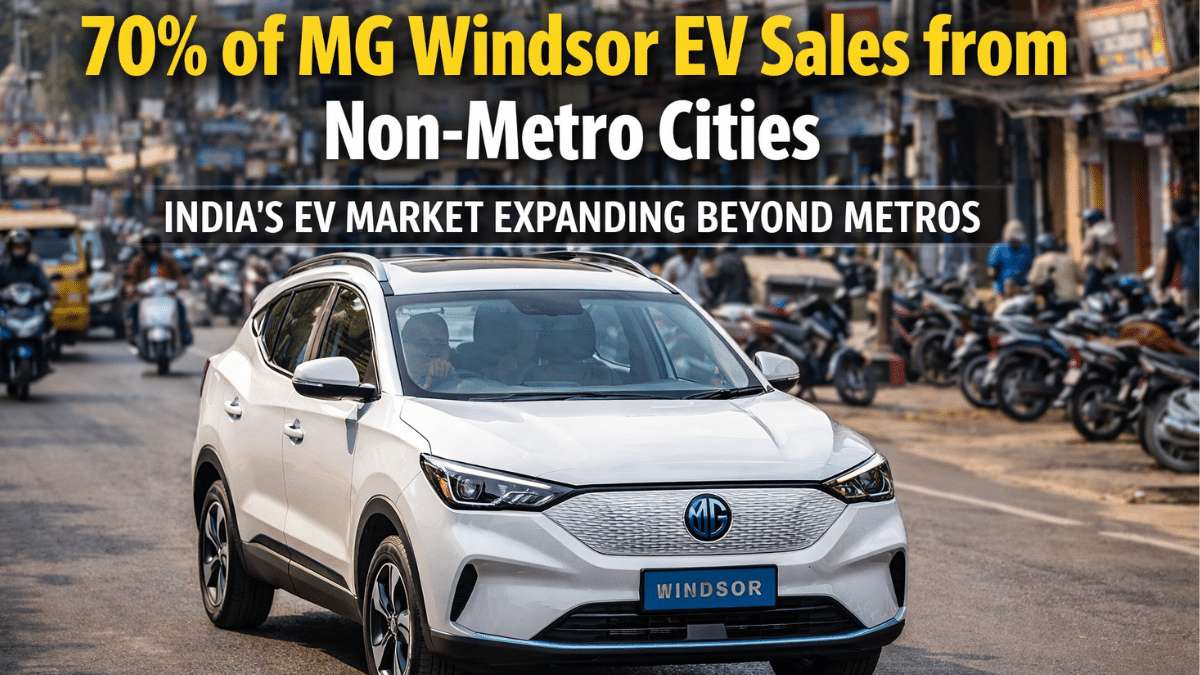

MG Windsor EV Non-Metro Sales are redefining the electric vehicle landscape in India, with nearly 70 percent of its total sales coming from smaller cities and towns. This trend marks a major shift in how EV adoption is spreading across the country.
While metro cities were once the primary drivers of electric vehicle demand, the success of the Windsor EV shows that non-metro regions are now playing an equally important role in shaping the future of mobility in India.
Key Development
JSW MG Motor India has revealed that a significant majority of Windsor EV sales are coming from non-metro markets. This highlights a clear shift in buyer behavior, where consumers in smaller cities are increasingly choosing electric vehicles as a practical mobility solution.
The growing contribution of non-metros indicates that EV adoption is no longer limited to urban centers with advanced infrastructure.
🚀 Join Our Tech Community!
Get the latest news, updates, and tech trends delivered straight to your phone. Never miss an update!
Why Non-Metro Demand is Growing
The rise in MG Windsor EV Non-Metro Sales is driven by several key factors.
In smaller cities, driving patterns are more predictable, making EV usage easier to manage. Daily commutes are typically shorter, and home charging becomes a convenient and reliable option.
Lower running costs compared to petrol and diesel vehicles are also attracting buyers who are looking for long-term savings.
Increasing awareness about electric mobility and government support are further encouraging adoption in these regions.
Product Strategy Behind Windsor EV Success
The MG Windsor EV has been positioned as a practical and user-friendly electric vehicle that appeals to a wide audience.
Its spacious cabin, modern features, and comfortable driving experience make it suitable for families as well as daily commuting.
Flexible ownership models and improved affordability have also contributed to its strong performance in non-metro markets.
These factors have helped the Windsor EV gain traction beyond traditional metro markets.
Changing EV Adoption Pattern in India
The growth of MG Windsor EV Non-Metro Sales reflects a broader transformation in the Indian automobile market.
Earlier, EV adoption was largely concentrated in metro cities due to better infrastructure and higher income levels.
Now, smaller cities are emerging as key contributors, driven by better access, improved awareness, and evolving consumer preferences.
This shift indicates that the EV market in India is becoming more widespread and inclusive.
Impact on the Automobile Industry
The increasing importance of non-metro markets is likely to influence future strategies of automakers.
Companies may focus more on expanding their presence in Tier-2 and Tier-3 cities through dealerships and service networks.
There may also be greater emphasis on building charging infrastructure in these regions to support growing demand.
This trend could accelerate overall EV adoption across the country.
Challenges to Consider
Despite the strong growth, certain challenges remain in non-metro EV adoption.
Charging infrastructure is still developing in many smaller towns, which can limit convenience for some users.
Awareness and trust in EV technology, while improving, may still vary across regions.
Initial purchase costs can also be a consideration, although long-term savings help offset this factor.