
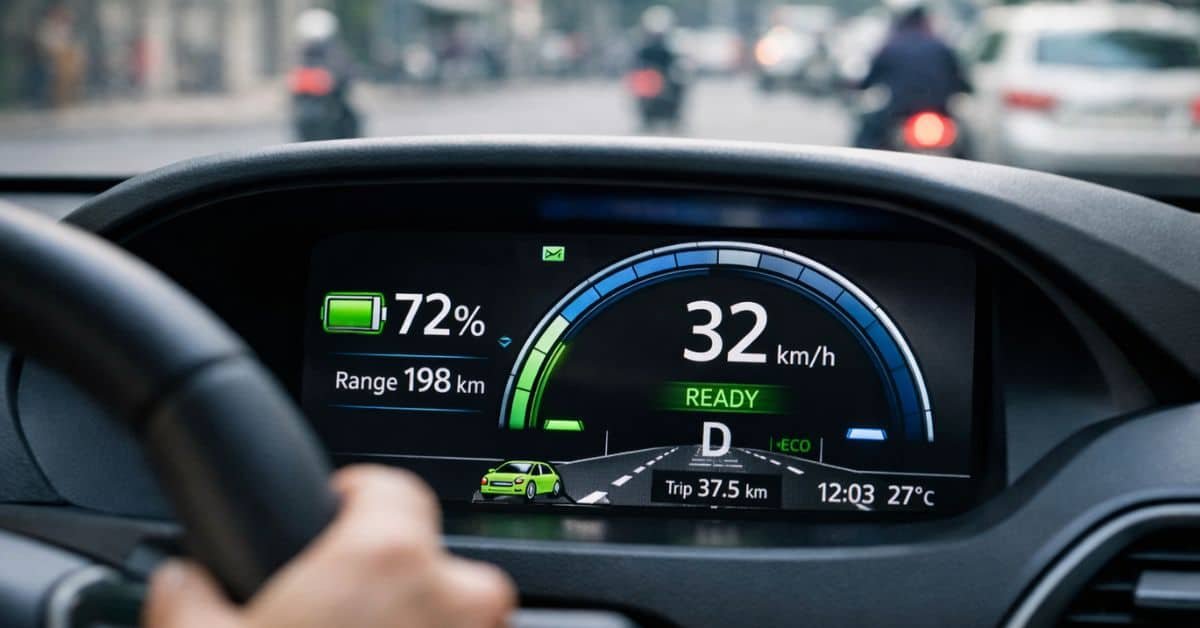

Most first-time EV buyers assume charging must happen every single day. This belief usually comes from petrol-car habits, where refuelling is treated as a last-minute task. EV ownership works differently. Charging is not about empty to full cycles, but about maintaining enough range for regular use. Once owners understand this shift, daily anxiety around charging starts to disappear.
Daily Driving Distances Change the Charging Equation
In Indian cities, daily driving rarely exceeds 30–40 km for private car owners. This includes office commutes, school runs, errands, and short evening trips. Modern EVs consume roughly 6–8 km per unit in city conditions, which means a single day of driving uses only a small portion of the battery. Even entry-level EVs can comfortably support multiple days of usage before needing a recharge.
Why Charging Every Day Is Usually Unnecessary
Daily charging sounds reassuring but is often unnecessary. Most EV batteries lose only 15–20% charge in a typical day of urban driving. Since cars remain parked for long hours at home, owners naturally have more charging time than they actually need. Over time, many realise they were charging out of habit rather than necessity.
How Charging Habits Settle After the First Month
During the first few weeks, new owners tend to plug in frequently, driven by range anxiety rather than actual need. After a month of ownership, patterns become predictable. Many owners charge once every two to four days, topping up from mid-level battery percentages instead of waiting for low levels. Charging becomes something done when convenient, not something planned around daily life.
🚀 Join Our Tech Community!
Get the latest news, updates, and tech trends delivered straight to your phone. Never miss an update!
Apartment Living and Charging Frequency Reality
Apartment owners often assume they will need to charge more frequently due to limited access. In practice, the opposite is true. Most apartment-based EV owners plan fewer but longer charging sessions, typically two or three times a week. Once routines settle, public charging becomes an occasional backup rather than a regular requirement.
Battery Health and Irregular Charging Gaps
Modern EV batteries are designed to handle partial charges and flexible schedules. Skipping a day or two between charging sessions does not harm the battery. In fact, avoiding constant full charges can be better for long-term battery health. Owners quickly learn that there is no penalty for letting the battery sit at moderate charge levels.
When Charging Frequency Temporarily Increases
There are periods when charging becomes more frequent, such as during consecutive long commutes, heavy summer air-conditioning use, or weekend highway trips. These situations are temporary and do not reflect everyday usage. Once driving patterns return to normal, charging frequency drops back to routine levels.
The Mental Shift That Removes Range Anxiety
The biggest change EV owners experience is psychological. Instead of worrying about when to charge next, they begin to trust remaining range. The thought process shifts from urgency to confidence, usually within the first few weeks. This mental adjustment is what truly defines comfortable EV ownership.
The Real Answer to Daily Charging Concerns
For most Indian EV owners, charging every day is not required. Charging every few days is far more common and fits naturally into urban lifestyles. Once habits form, charging becomes a background activity rather than a daily concern, allowing the EV to blend seamlessly into everyday life.