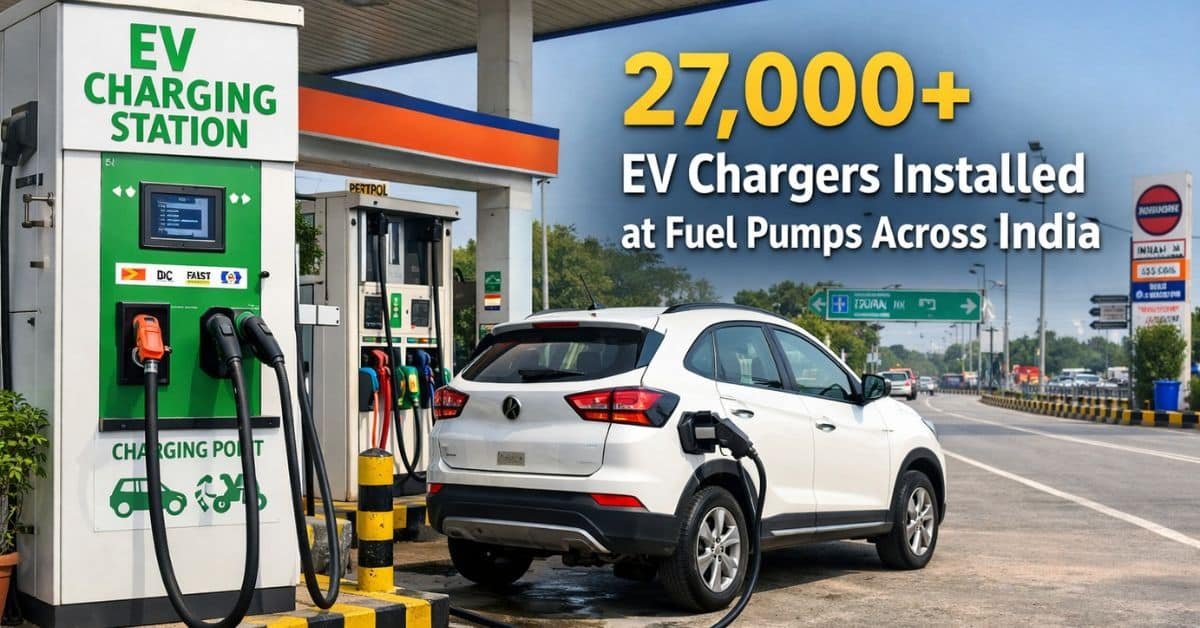

India has crossed a major milestone in its electric-mobility journey, with more than 27,000 EV charging points now operational at fuel pump locations across the country. The expansion, driven by coordinated efforts from oil marketing companies and public agencies, significantly improves access to fast and slow chargers for both electric cars and two-wheelers.
The rollout is part of a broader push by the Government of India to integrate EV charging into everyday refuelling infrastructure, making it easier for drivers to find reliable charging along highways and within cities. By colocating chargers at petrol pumps, authorities aim to address one of the biggest hurdles to EV adoptionrange anxiety.
Why charging at fuel pumps matters
Fuel pumps already sit at strategic locations with 24/7 access, security, and amenities. Adding chargers here reduces the need for standalone charging hubs and helps EV users plan long-distance travel with confidence. For urban users, it also means predictable access points close to homes and workplaces.
Industry officials say the network now spans metro cities, Tier-2 and Tier-3 towns, and key highway corridors, improving coverage beyond early EV hotspots. This is particularly relevant for two-wheelers, which account for a large share of India’s EV sales and benefit from frequent, short charging stops.
🚀 Join Our Tech Community!
Get the latest news, updates, and tech trends delivered straight to your phone. Never miss an update!
What’s been installed
While the exact mix varies by location, the expanded network typically includes:
- AC chargers for longer, lower-cost charging sessions
- DC fast chargers at high-traffic sites for quicker top-ups
- Dedicated bays and signage to streamline access and reduce wait times
Many sites also support multiple connector standards, improving compatibility across brands and models.
Impact on EV buyers
For prospective buyers, the growing presence of chargers at familiar fuel stations lowers the perceived risk of switching to electric. Current EV owners gain greater route flexibility, especially on intercity trips where charger availability has historically been patchy.
Automakers and dealers expect the development to support stronger EV sales momentum in 2026, as charging visibility improves and daily usability concerns fade. The move also aligns with fleet adoption taxis, delivery vans, and shared mobility services where uptime and predictable charging are critical.
What comes next
Authorities have indicated that the focus will now shift to optimising uptime, standardising pricing transparency, and expanding high-capacity chargers on busy corridors. Integration with digital platforms for real-time availability and payments is also expected to improve the user experience.
By embedding EV charging into India’s existing fuel-pump network, the country is taking a practical step toward mainstream electric mobility. With thousands of new access points already live and more planned, charging is becoming less of a barrier and more of a routine stop, accelerating the transition for cars and two-wheelers alike.