
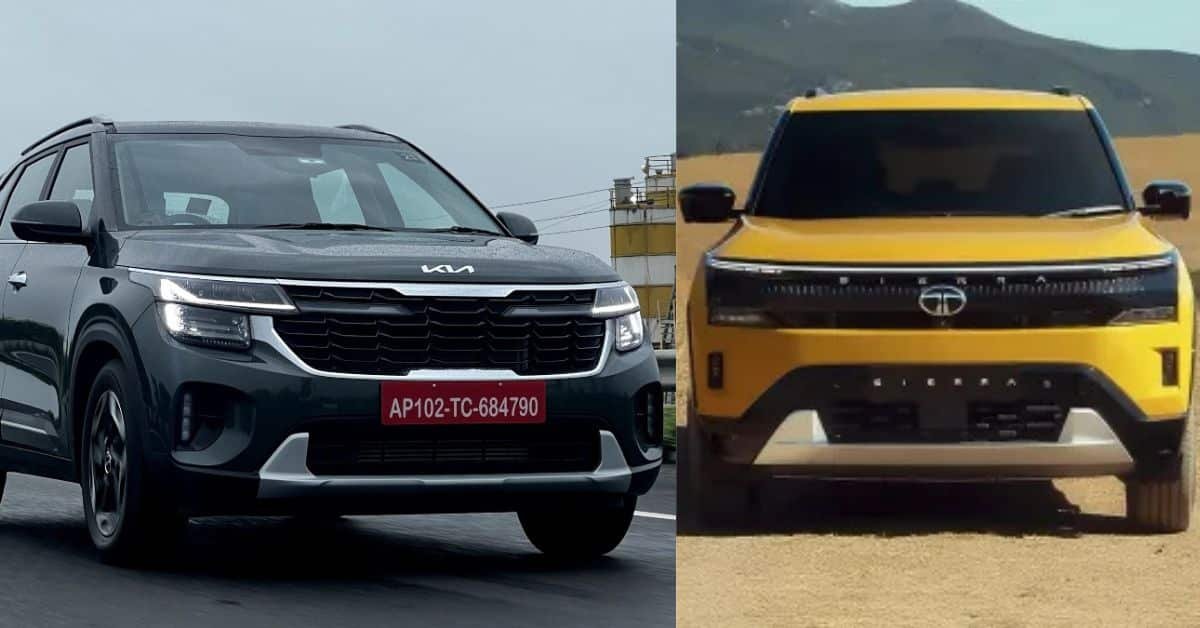

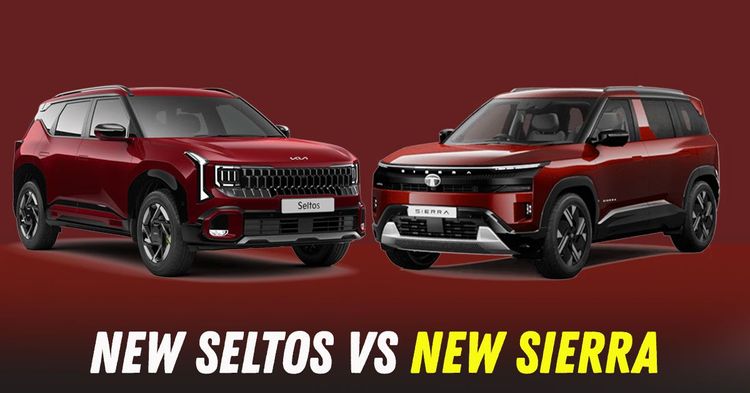
The mid-size SUV segment is buzzing again, and this time it’s the new-generation Kia Seltos going head-to-head with the much-anticipated Tata Sierra. Both SUVs target buyers who want premium features, modern tech, and a strong road presence. While the Seltos continues to refine its proven urban-SUV personality, the Sierra returns in an all-new avatar with a bold design and a more adventure-ready vibe. Here’s a simple and clean comparison of their top trims to help you see how they stack up.
Design & Exterior Highlights
Both SUVs come with a full-LED lighting setup, sharp lines and a premium profile, but their approach is slightly different.
- Kia Seltos leans toward a modern, city-friendly look with crisp LED DRLs, connected tail lamps, and sportier body accents.
- Tata Sierra, on the other hand, carries a tougher SUV stance with a more upright design, wider shoulders, and a distinctive glass-house inspired by the classic Sierra silhouette.
Where the Sierra gets the upper hand is in small but useful touches, such as all-door puddle lamps and larger alloy wheels. The Seltos counters this with electrically adjustable ORVMs paired with seat memory — a feature that adds driver convenience.
Interiors & Infotainment Experience
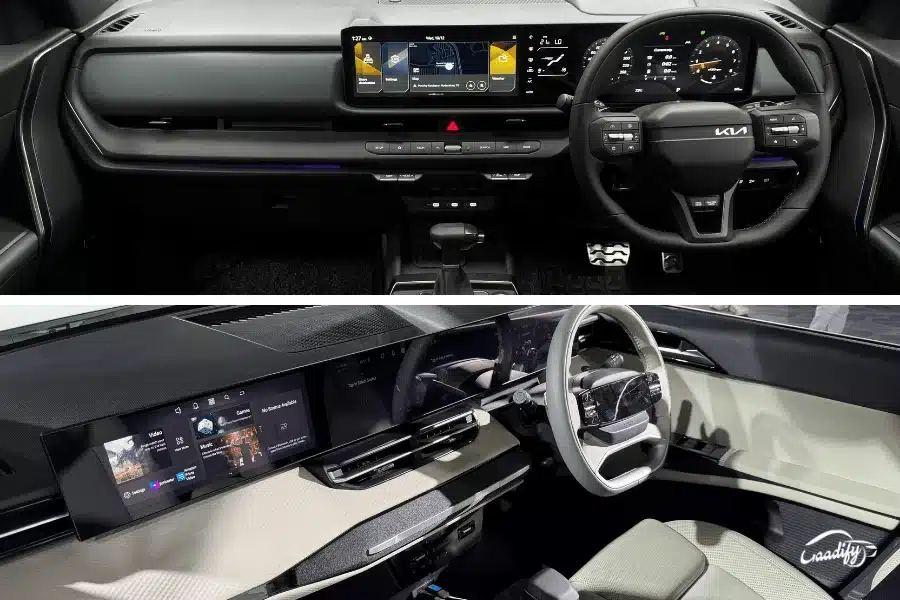
Step inside either SUV and you’re greeted with a digital, feature-rich cabin — but the character of the interiors is different.
🚀 Join Our Tech Community!
Get the latest news, updates, and tech trends delivered straight to your phone. Never miss an update!
Kia Seltos Top Trim Offers:
- A wide 12.3-inch touchscreen
- 12.3-inch fully digital instrument cluster
- Panoramic sunroof
- Premium Bose sound system
- Powered driver seat with memory, lumbar support and welcome function
- Ventilated front seats, wireless charging and connected features
Kia’s layout feels very driver-centric. The screens face the driver, and the ergonomics are tuned to make you feel in command.
Tata Sierra Top Trim Offers:
- A large 12.3-inch infotainment system
- An additional passenger display for co-driver entertainment
- JBL audio with immersive tuning
- Dual-zone climate control
- Air purifier, cooled glovebox and generous cabin storage
- Premium seat cushioning and a warm, lounge-like interior theme
The Sierra’s cabin is built for comfort and longer journeys. The extra passenger display and upgraded sound system add to its tech appeal.
Features & Tech: What Stands Out
Both SUVs pack a long list of modern features — from wireless Android Auto/Apple CarPlay to voice control, connected apps, ventilated seats and a panoramic sunroof. But each has its signature strengths:
- Seltos shines with its driver-oriented features — memory seats, bigger digital cluster, and refined control layout.
- Sierra impresses with passenger comfort extras — additional screen, stronger audio setup, and practical conveniences like the cooled glovebox.
Safety & Driving Aids
Both SUVs offer a comprehensive suite of safety and driver assistance features:
- Six airbags
- 360-degree camera
- Electronic Stability Control
- All-wheel disc brakes
- Hill-assist
- Level-2 ADAS
- Adaptive cruise control
In terms of drive modes, the Seltos usually includes multiple options — Eco, Normal, Sport — along with terrain modes for snow, mud and sand. The Sierra tends to prioritise comfort-based modes suited for everyday city and highway conditions.
Which SUV Makes More Sense?
- Pick the Tata Sierra if you prefer a roomier cabin, stronger focus on comfort, premium in-cabin experience, and a more rugged road presence.
- Go with the Kia Seltos if you want sharper handling, a tech layout that prioritises the driver, and more refined ergonomics.
Since final pricing and variant details often decide the value-for-money factor, the winner ultimately depends on what you prioritise:
comfort and space (Sierra) or driver feel and tech finesse (Seltos).