
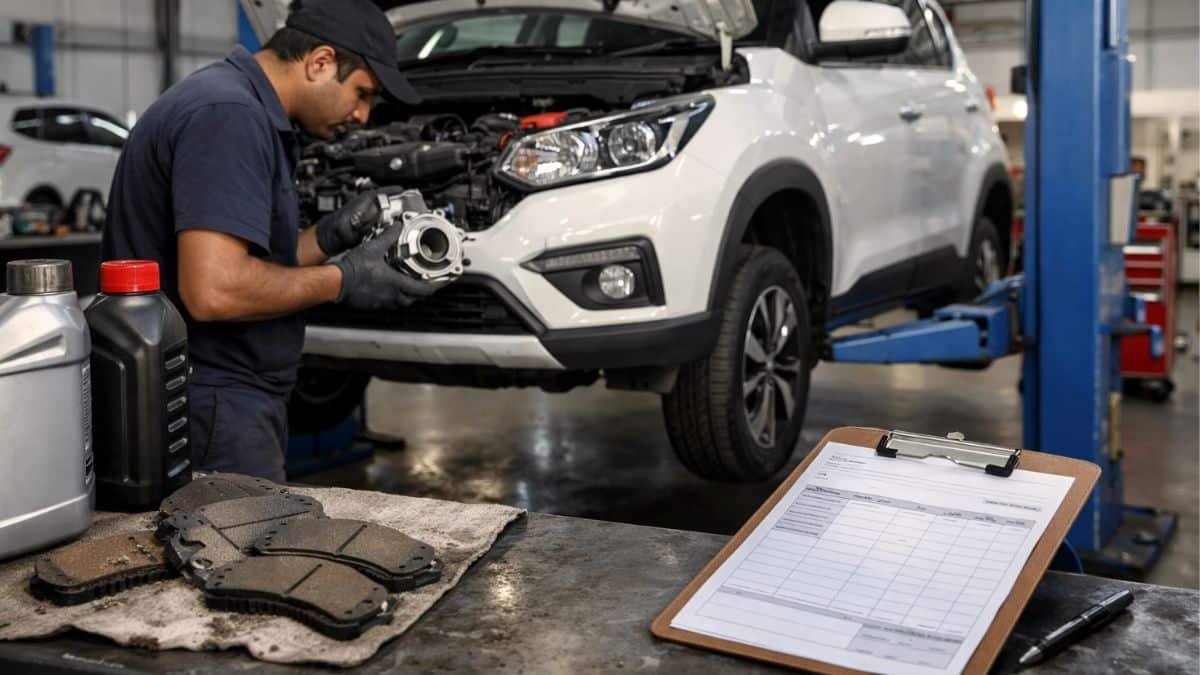
The 1.0-litre turbo petrol SUV has become the go-to upgrade for Indian buyers moving from hatchbacks. Compact, punchy, and relatively affordable, these engines promise strong mid-range performance without the diesel premium. But beyond showroom pricing and EMI calculations, what does ownership really cost over five years?
For a website at an early authority stage, this topic directly answers buyer intent: long-term cost clarity. Let’s break it down with realistic Indian usage patterns (12,000–15,000 km per year), metro and Tier-2 service pricing, and typical wear components.
Annual Service Cost Breakdown in India
A 1.0L turbo petrol engine is more complex than a naturally aspirated unit. It runs higher compression, uses a turbocharger, and often requires synthetic oil. That directly impacts routine maintenance.
Typical periodic service costs (authorised service centre):
Year 1: ₹5,000 – ₹7,000
Year 2: ₹7,000 – ₹10,000
Year 3: ₹9,000 – ₹14,000 (major service)
Year 4: ₹7,000 – ₹10,000
Year 5: ₹12,000 – ₹18,000 (major service + consumables)
Estimated 5-year scheduled service total: ₹40,000 – ₹60,000
Major cost drivers include:
- Fully synthetic engine oil
- Turbo-compatible spark plugs (shorter replacement cycle)
- Throttle body cleaning
- Fuel injector servicing
Unlike diesel engines, there’s no DPF risk, but turbo petrol engines are sensitive to oil quality and service intervals. Skipping services can reduce turbo life significantly.
Turbo Component Longevity & Replacement Risk
The biggest concern for buyers is turbocharger failure. The good news? With proper maintenance and cool-down driving habits, modern turbos typically last 1.5–2 lakh km.
However, if replacement becomes necessary:
Turbocharger replacement: ₹45,000 – ₹80,000 (including labour)
This is not a routine cost but a risk factor. Realistically, under normal usage within 5 years, failure probability is low unless the vehicle is driven aggressively without warm-up or cool-down practices.
Other 5-year wear items:
- Clutch replacement (manual): ₹18,000 – ₹30,000
- Brake pads & discs: ₹12,000 – ₹20,000
- Battery replacement: ₹6,000 – ₹8,000
If you’re comparing this against electric ownership models discussed in Home EV Charging in Tier-2, remember that petrol SUVs avoid infrastructure installation expenses but have higher recurring mechanical servicing.
Real 5-Year Ownership Estimate
Let’s combine everything into a realistic 5-year picture:
Scheduled servicing: ₹50,000 (average)
Brake & wear parts: ₹20,000
Battery: ₹7,000
Unexpected repairs buffer: ₹20,000
Total estimated 5-year maintenance outflow: ₹97,000 – ₹1,20,000
This excludes fuel, insurance, and depreciation.
For comparison, buyers researching Home EV Charger in India often discover that EVs shift costs upfront (installation + charger), while turbo petrol SUVs distribute costs across service cycles.
Fuel Efficiency Impact on Maintenance Economics
Most 1.0L turbo petrol SUVs deliver:
City: 12–15 km/l
Highway: 17–19 km/l
Real-world mileage depends heavily on driving style. Aggressive throttle inputs increase turbo stress and fuel consumption.
Over five years (15,000 km/year, ₹105/litre average petrol cost):
Annual fuel expense: ~₹1.05 – ₹1.25 lakh
5-year fuel expense: ₹5 – ₹6.2 lakh
Fuel cost dwarfs maintenance cost. That’s why buyers should not focus only on service bills when comparing ownership.
LSI keywords naturally relevant here:
- turbo petrol engine reliability
- SUV maintenance cost India
- 5 year car ownership cost
- synthetic oil service interval
- long term car reliability
Is It Cheaper Than a Naturally Aspirated Petrol?
Compared to a 1.5L naturally aspirated petrol SUV:
Pros of 1.0L turbo:
- Better torque delivery
- Lighter engine
- Often lower upfront price
Cons:
- Slightly higher service sensitivity
- More expensive spark plugs
- Turbo risk factor
Over 5 years, the difference in maintenance between turbo and NA petrol is roughly ₹15,000 – ₹25,000. Not drastic, but worth factoring in.
Who Should Buy a 1.0L Turbo SUV?
Ideal for:
- Urban drivers wanting punchy performance
- Buyers upgrading from premium hatchbacks
- Those driving under 15,000 km per year
Avoid if:
- You skip scheduled services
- You plan to keep the vehicle 10+ years
- You frequently drive in extreme heat without proper maintenance
In 2026, turbo petrol SUVs remain financially viable for 5-year ownership cycles. The real expense is fuel, not servicing. Maintenance is manageable if you follow recommended intervals.
